
Polyvinyl Alcohol is a few kind of synthetic with water souble high-molecular polymer. The main specification includes degree of polymerization & alcoholysis and other specical performance. Polyvinyl Alcohol is manufactured by polymerization of vinyl acetate in methanol solvent, then undergoing alcoholysis via advanced belt-process of low-alkali. After grining, drying and packing, the end PVA products are achieved.
Polyvinyl alcohol (PVA) is a water-soluble synthetic polymer that is produced by the partial hydrolysis of polyvinyl acetate. It is a colorless and odorless solid, and it is commonly used in various industries, such as paper, textiles, adhesives, coatings, packaging, and more.
PVA is known for its excellent film-forming properties, which makes it a popular choice for coatings and packaging films. It is also used as a binder in paper and textiles and as an adhesive in a range of applications. Additionally, PVA can be modified with different additives to improve its properties, such as its strength, water resistance, and flexibility.
PVA is a non-toxic and biodegradable material, which makes it an eco-friendly choice for many applications. However, its biodegradability depends on the conditions of the environment in which it is disposed, and it may take a long time to decompose in certain conditions.
Protective coating
PVA is a popular material for producing protective coatings. It provides a transparent and durable coating that can protect various substrates, including metal, plastic, and wood, from corrosion, abrasion, and other types of damage.
Vapor barrier
PVA is a highly effective vapor barrier. Its water resistance and film-forming properties make it ideal for preventing water vapor penetration into structures, which can cause moisture damage, mold growth, and other problems.
Excellent film former
Polyvinyl alcohol is a great film former, meaning it can create thin films with superior properties such as transparency, flexibility, and tensile strength. These films are often used to produce packaging materials, coatings, and adhesives.
Removable
It's a water-soluble polymer that can be easily removed from substrates with water. This property makes it an ideal material for temporary coatings, such as those used for protecting delicate surfaces during transportation or storage.
Water-based solution
PVA can be easily dissolved in water to form a water-based solution, making it an eco-friendly and cost-effective alternative to solvent-based coatings and adhesives. This makes it suitable for home use, where you'll encounter many benefits of water-soluble glue.
Product Diversification
Xiamen ditai chemical co., ltd. Is a professional chemical company in China, with products including industrial chemicals, animal feed additives, food additives, agricultural chemicals, fertilizers, pharmaceuticals, water treatment and minerals
Good Price-performance Ratio
We believe that competitive prices for goods are also important. Our comprehensive distribution network, purchasing power and efficient inventory management system enable us to provide our products at the best prices
Professional Team
Our management team has about 20 years of combined expertise to meet customer needs.
Certificate Certification
Iso9001:2008 certified institutions, iso9001 standard quality management and sgs quality control can allow us to clearly grasp the actual quality of the goods.
PVA advocates promote its EOL (end-of-life) performance, where its ability to be broken down by bacteria and its low toxicity provide a more sustainable alternative to other materials such as LDPE.
It should be noted that dissolving it in water does not mean the PVA has disappeared. Much like dissolving salt in water, you cannot see it but the salt is certainly still there. Studies have shown that solutions containing up to 5% PVA are non-toxic to fish.
While bacteria and fungi can biodegrade the material, this occurs slowly – One study indicates degradation of just 32% during wastewater treatment processing, with the remainder either released into the environment, landfilled, incinerated or used in agriculture together with other waste treatment endproducts. The effects of this remaining 68% are poorly understood as of writing, but biodegradation will continue to occur.
As a synthetic polymer manufactured from acetic acid and ethylene, PVA is usually derived from fossil fuels, though it is possible (although uncommon) to source ethylene made from renewable, bio-based sources.
The polyvinyl alcohol resin series products can be dissolved in hot water below 95℃, but due to the difference in the degree of polymerization, alcoholysis degree, and alcoholysis methods, there are certain differences in dissolution time and temperature. When using different brands of polyvinyl alcohol resin, the dissolution method and time need to be explored. When dissolving, this product can be slowly added into cold water at about 20℃ while stirring to fully swell, disperse and escape of volatile substances (do not add this product to water above 40℃ for direct dissolution to avoid the occurrence of clumps.) Then the temperature is raised to about 95 °C to accelerate the dissolution, and the temperature is maintained for 2 to 2.5 hours until the solution no longer contains tiny particles. After filtering impurities, it can be used for later use.


The stirring speed is 70~100 rpm. When heating up, indirect heating methods such as water bath can be used, or direct heating with water vapor can be used. However, direct heating cannot be used with an open flame to avoid overheating and decomposition. If there is no mixer, it can be dissolved by blowing steam in a tangential direction.
The aqueous solution concentration of polyvinyl alcohol resin series products is generally below 12~14%; The aqueous solution concentration of low alcoholysis degree polyvinyl alcohol resin products can generally be around 20%.
The method to check whether this product is completely dissolved: take out a small amount of solution, add 1~2 drops of iodine solution, if there is a blue mass transparent body, it means that it has not been completely dissolved, if the color can spread evenly, it means that it has been completely dissolved.
High flexibility and tensile strength
Polyvinyl alcohol has a high degree of flexibility and tensile strength, making it an ideal material for use in textiles, adhesives, and films.
It's water-soluble and odorless
Pva is soluble in water, forming a clear solution. It's also odorless, which makes it suitable for use in applications where odor is a concern.
High melting point
Polyvinyl alcohol has a melting point of about 200 degrees celsius, which makes it a stable material even in high temperatures.
Polyvinyl alcohol is ductile but also flexible and robust
This means pva can be stretched without breaking. It's also strong and flexible, making it suitable for various applications.
It also works as a high oxygen barrier
Pva is an adequate oxygen barrier. This makes it useful for packaging applications where it's crucial to protect the contents from oxygen.
Repellent to grease and water
It's water resistant and repellent to oil, making it useful in applications where these properties are desirable.
Polyvinyl alcohol is an atactic polymer
Pva molecules are randomly oriented. This property affects its mechanical properties as well as other characteristics.
Reactivity
Pva reacts with butyraldehyde and formaldehyde, making it helpful in producing adhesives and resins.
Polyvinyl alcohol Resin is also called Poly Vinyl Alcohol Resin, PVOH, PVA. PVA Resin comes in various classifications, each serving specific purposes and industries. It is a soluble resin widely utilized in textile pulp, adhesives, construction, and other sectors. Moreover, PVA can be modified to create films, such as degradable mulch film and fresh-keeping film, making it eco-friendly due to its natural degradation.
Two essential indicators of PVA are the degree of polymerization and the degree of alcoholysis, with classifications like 17-99, 20-99, 23-99, and more. For instance, 17-99 signifies a polymerization degree of 1700 and an alcoholysis degree of 99%. Depending on the characteristics, PVA can be categorized into flocculent and flake (granular) types.
Higher polymerization degrees1 result in greater solution viscosity, while lower alcoholysis degrees2 enhance low-temperature solubility. PVA variants with lower polymerization and higher alcoholysis are commonly used in textile pulp, while others are employed as protective colloids for water-based adhesives or construction adhesives, like the well-known 107 and 801 construction glue.
Polyvinyl alcohol 17-88, also known as PVA 1788, exhibits interesting properties. Its aqueous solution viscosity gradually increases over time at room temperature, except when the concentration reaches 8%, at which point the viscosity remains stable. The unique characteristic of PVA is its excellent film-forming ability, making it highly resistant to most gases except water vapor and ammonia. Moreover, PVA possesses good light resistance, rendering it unaffected by light exposure. It can burn in an open fire, emitting a distinct smell. The aqueous solution of PVA may sometimes become toxic during storage, although it is non-irritating to human skin.
Polyvinyl alcohol 17-99, also referred to as sizing resin or PVA 1799, presents as a white or yellowish powder or floc solid. It has a glass transition temperature of 85°C and a saponification value ranging from 3 to 12 mgKOH/g. Soluble in hot water at 90-95°C, it is almost insoluble in cold water. Aqueous solutions with concentrations exceeding 10% gel and freeze at room temperature but regain fluidity at higher temperatures. To stabilize the viscosity, additives like sodium thiocyanate, calcium thiocyanate, phenol, and butanol can be incorporated into the solution. PVA17-99 exhibits higher sensitivity to borax-induced gelation compared to PVA17-88. A 0.1% borax concentration will cause a 5% PVA17-99 aqueous solution to gel, whereas a 1% borax concentration is required for the same effect in a PVA 17-88 solution. For PVA aqueous solutions with equal concentrations and alcoholysis degrees, borax is more prone to induce gelation than boric acid.
Polyvinyl alcohol 24-88, or PVA 2488, is characterized by its small particle polymer that readily disperses in cold water. This quality enables quick dispersion in water, leading to high-viscosity aqueous solutions with excellent stability and decorative effects. Consequently, it improves the characteristics of cement mortar, and PVA 2488 also exhibits capillary and adsorption functions.
Solubility
Polyvinyl alcohol powder can be dissolved in water. Polyvinyl alcohol resin (PVA) with an alcoholysis degree of less than 95% can be dissolved in water at room temperature, while polyvinyl alcohol resin (PVA) with an alcoholysis degree of more than 99.5% needs to be dissolved at 95°C.
Thermal stability
Polyvinyl alcohol softens when heated, and there is no obvious change below 40°C. Glass transition temperature: 75-85°C. When heated to above 100°C, it gradually changes color and becomes brittle. Above 160°C, long-term heating will gradually change color, dehydrate and etherify, and lose solubility; Above 220°C, it decomposes to generate water, acetic acid, acetaldehyde and crotonaldehyde; At temperatures above 250°C, it transforms into a polymer containing conjugated double bonds.
Chemical resistance
PVA is almost unaffected by weak acids, alkalis or organic solvents, and has strong oil resistance.
Storage stability
PVA is a low-viscosity polymer, and its aqueous solution is very stable at room temperature and will not deteriorate during storage.
Film-forming property
Since PVA molecules have high adhesion, PVA is easy to form a film. The resulting film is colorless and transparent, has good mechanical strength, a smooth and non-sticky surface, and good solubility. The molecular film has good light transmittance, high moisture permeability, no charge, no dust absorption, and good printability.
Papermaking
Pva is a biodegradable imitation of a natural polymer used as a binder in the papermaking process, helping to bind the fibers together and increase the strength of the paper. In particular, making them more resistant to oils and fats.
Textiles
Polyvinyl alcohol is a biodegradable imitation of a natural polymer used as a sizing agent in textile production, helping to stiffen and strengthen fabrics. In particular, making them more resistant to oils and fats.
Ceramics
Pva is used as a binder in ceramic production. It binds ceramic particles together and increases the strength of the final product.
Construction
The construction industry uses pva as a binder, helping to bond and seal various building materials.
Pharmaceuticals
Pva is used as a binder and tablet disintegrant in the manufacture of tablets, capsules, and granules.
Tissue engineering science
Pva-based materials are also used in tissue engineering science
Paints and varnishes
Polyvinyl alcohol is used as a binder in paints and varnishes because of its ability to form hard, durable films.
Food industry
Polyvinyl alcohol is used in the food industry as a thickener and emulsifier for foods such as sauces, jellies, and condiments. Pva is also used as a coating agent for food supplements and does not pose any risk to health due to its non-toxicity. One of the major industrial uses of pva is in food packaging, accounting for nearly 31.4% of the global share. To prevent moisture formation in food, pva films are designed to be thin and waterproof. Its cross-linking density and moisture resistance add advantages to its usability in this field.
Biomedical applications
Pva is used in biomedical applications due to its compatibility. Pva composites such as pva gels are used in different biomedical fields such as contact lens manufacturing, artificial heart surgery, drug delivery systems, and wound dressings.
Medical devices
In medical devices, pva is used as a biomaterial because of its very favorable properties such as biocompatibility, non-toxicity, non-carcinogenicity, swelling properties, and bioadhesive properties. This material is very useful and ideal for biomedical applications and uses. There are currently some non-implantable and implantable devices made of different forms of pva and hnt.
Freshwater sport fishing
In freshwater sport fishing, pva is added to bags filled with oil-based or dry bait and attached to the fish hook. Since pva is soluble in water, when the bag hits the bottom it breaks down, leaving the hookbait surrounded by particles and bottom bait. This attracts fish to the bait, although pva does cause the plastic to dissolve in the water.
Polyvinyl Alcohol (Pva) Storage Method
Temperature and humidity
Store polyvinyl alcohol in a cool, dry place. Exposure to high temperatures and humidity can cause changes in the material's physical properties, such as increased hygroscopicity. Avoid storage in areas prone to temperature fluctuations.
Sealed containers
Store polyvinyl alcohol in sealed containers to prevent it from absorbing moisture. Pva is water-soluble and exposure to moisture can affect its properties. Use sealed containers or bags to protect the material from environmental conditions.
Protect from light
Store polyvinyl alcohol (pva) away from direct sunlight and other sources of UV light. Prolonged exposure to light can cause the polymer to degrade.
Avoid contamination
Polyvinyl alcohol (pva) should be kept away from contaminants such as dust, dirt, and chemicals that May affect its performance. Use clean utensils and tools when handling and transferring pva to prevent contamination.
Handling precautions
Follow proper handling procedures to avoid introducing impurities when storing and using polyvinyl alcohol. Wear appropriate personal protective equipment such as gloves and safety glasses when handling the material.
First in, first out (fifo)
Follow a first in, first out system to ensure that older batches of pva are used first. This helps prevent the material from being stored for long periods of time, thereby reducing the risk of degradation.
Inspect for changes
Regularly inspect stored pva for signs of discoloration, clumping or changes in texture. If any anomalies are found, the cause must be investigated and the suitability of the material assessed.
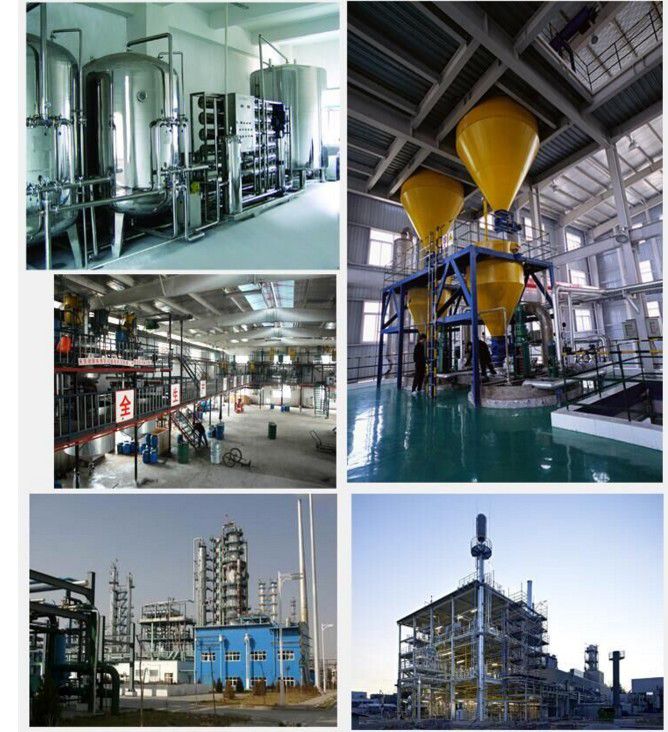
Xiamen Ditai Chemicals Co., Ltd is a professional chemical company in China. Specializing deal and export various kinds of quality chemicals since 1997. The products Include industry chemical, Animal feed additive, Food additive, Agrochemical, Fertilizer, pharmaceuticals, water treatment and Minerals. Our management team has about 20 years of combined expertise meeting the needs of clients. We are proud our quality chemcials and service was approbated by the clients in the worldwide. Xiamen Ditai Chemicals Co., Ltd is an ISO9001:2008 certificated organization. We always pay attention to the quality control......
ISO9001:2008 certified organization, ISO9001 standard quality management and SGS quality control can let us clearly grasp the actual quality of the goods

